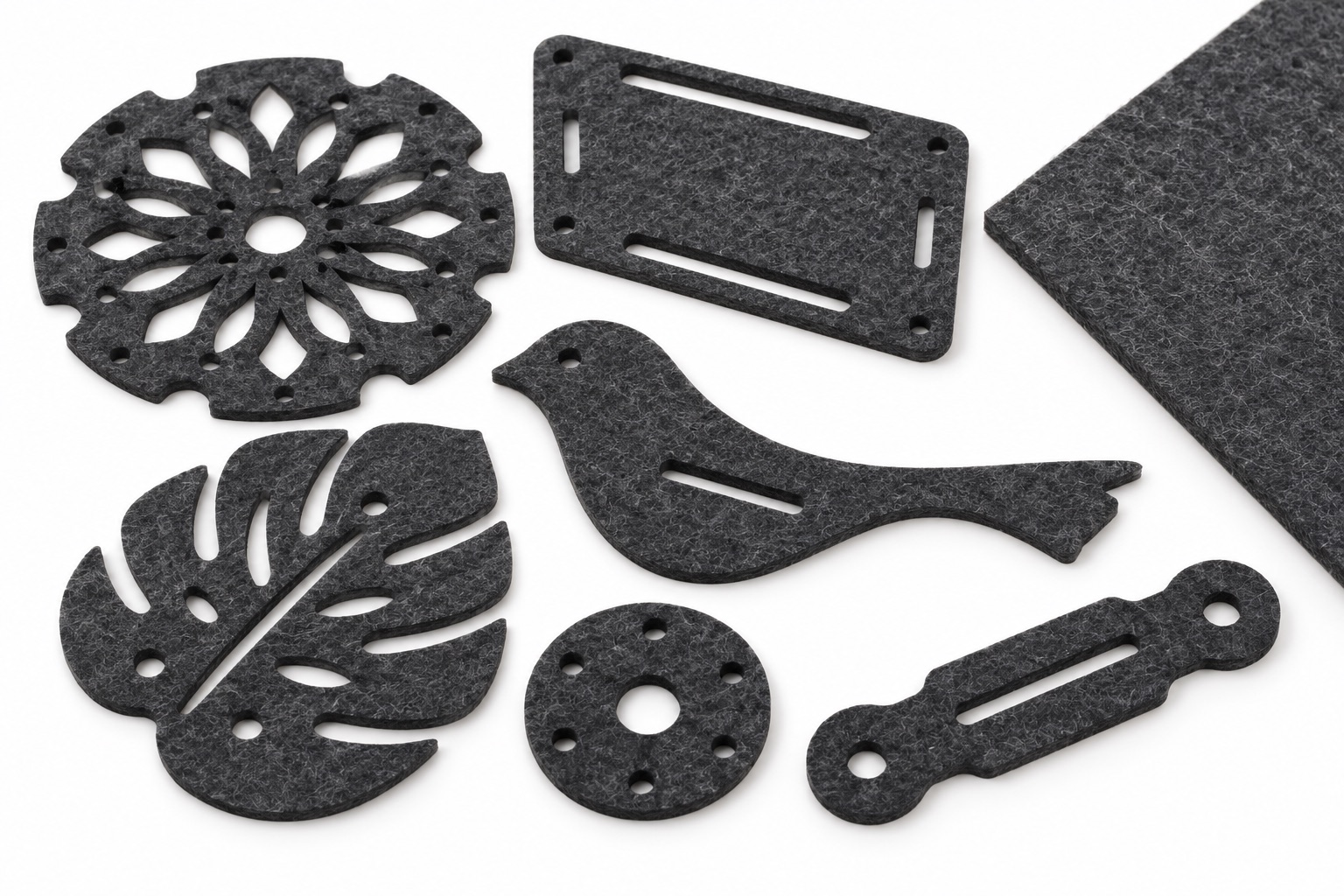
Laser-cut felt is useful when an OEM drawing calls for intricate outlines, slots, lettering, or a changing design that should be reviewed before committing to a cutting tool.
Where this product fits
Design engineers and sourcing teams can send vector artwork or a dimensioned drawing for a project-specific cutting review.
- intricate inserts, liners, pads, and protective shapes
- prototype runs where geometry may change
- cutouts, slots, and nested patterns in sheet felt
What to send for a custom quotation
- DXF, DWG, PDF, or vector artwork with a scale reference
- material preference, thickness, color, and edge appearance
- minimum feature and hole sizes, critical dimensions, and tolerance expectations
- quantity, sample purpose, and any adhesive or assembly step
Dimensions are made to your approved drawing or sample. Material, tolerances, quantity, packaging, and timing are confirmed during the project review.
Material, sample and production review
A laser route is reviewed against the felt composition, thickness, desired edge, and part geometry. Heat-affected edges, discoloration, and cut accuracy need to be checked on an approved sample when they matter to the application.
Selection notes
For high repeat volume or a simple stable outline, die cutting may be a better route. The choice is made after reviewing the drawing, material, quantity, and acceptable edge result.
Frequently asked question
Can I request laser-cut felt from a drawing?
Yes. Send a scaled file and mark critical dimensions. We will confirm the material and sample checks needed before quoting.
Related felt solutions
Request a quote
Send your drawing, sample photos, target dimensions, application, quantity, and destination through our B2B inquiry form. You can attach a PDF, JPG, PNG, DXF, or DWG file. We will review the brief and confirm the open specification points.