Die-cut felt supports repeatable shapes for production programs when the outline, holes, material, and quantity are defined.
Request a custom quote · Quotation checklist
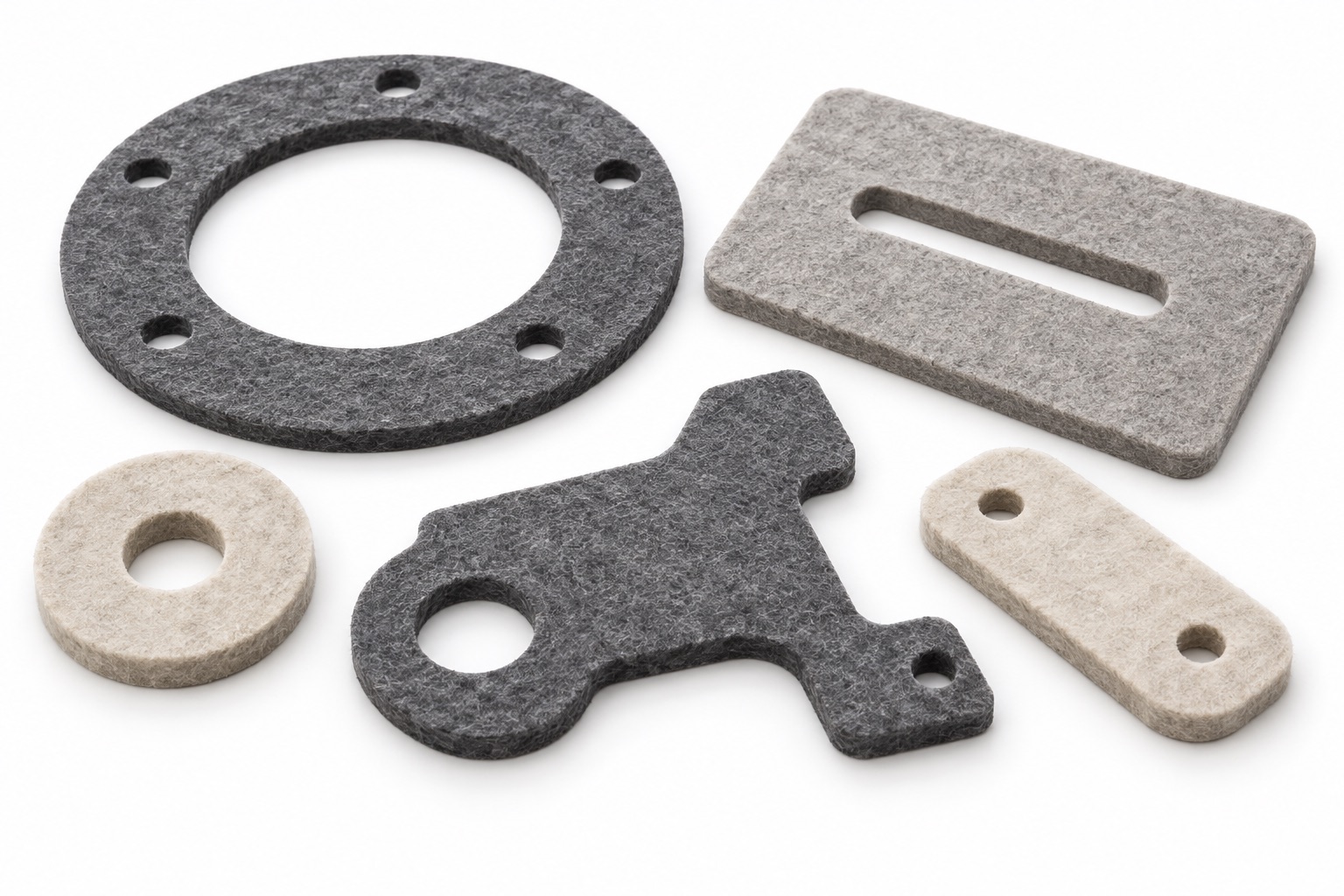
Where die-cut felt fits
Die cutting can be reviewed for a stable outline and a repeat production requirement. Typical project briefs include gaskets, washers, rings, pads, spacers, internal cutouts, and adhesive-backed parts.
Define the drawing and material
- Drawing revision, units, outline, hole positions, and critical tolerances.
- Felt composition, thickness, density or grade, color, and surface.
- Adhesive, release liner, orientation, and the intended assembly.
- Sample quantity, forecast production quantity, packing, and destination.
Mark any information still to be confirmed. Dimensions, material, tolerances, tooling, and timing are agreed during project review.
Specify how cut parts should be supplied
The same outline can require a different cutting and handling brief depending on how the parts will be removed and assembled. State the preferred presentation; its feasibility must be confirmed with the material and sample.
| Detail | What to specify |
|---|---|
| Cut depth | Whether the cut should pass through the complete construction or retain the release liner beneath the felt and backing. |
| Presentation | Loose parts or parts retained on a liner, plus the layout, orientation, and separation needed for assembly. |
| Quantity basis | Count of usable finished parts, parts per sheet or layout if applicable, and packing quantity. |
| Handling check | How the part will be picked up or removed from its liner, and what damage, distortion, or exposed adhesive is unacceptable. |
For backing approval, use the adhesive-backed sample checklist.
Approve the sample and tooling scope
The cutting tool and layout depend on geometry, material behavior, quantity, and edge requirements. Check fit, hole location, edge quality, and handling against the approved drawing and actual assembly.
For repeat die-cut felt orders, identify the approved drawing revision, material construction, backing or liner arrangement and reference sample. List proposed changes before requesting a revised quotation, including changes to geometry, material or part presentation. Use the felt part sample approval record to identify which checks and open actions apply to the revised brief.
Can I start without final tooling drawings?
A drawing, sample, or clear dimensional brief can start the review. Tooling details and any setup cost are confirmed after geometry and material are agreed.
If the design is still changing or contains fine details, compare another route using the laser-cut vs die-cut quotation checklist. Compare the same drawing revision, material, quantity, and acceptance criteria.
Request a custom quote
Send your drawing, sample photos, target dimensions, application, quantity, and destination through the B2B project inquiry form. Attach one PDF, JPG, JPEG, PNG, DXF, or DWG file up to 10 MB. For larger or multiple files, describe what is available in the project details.